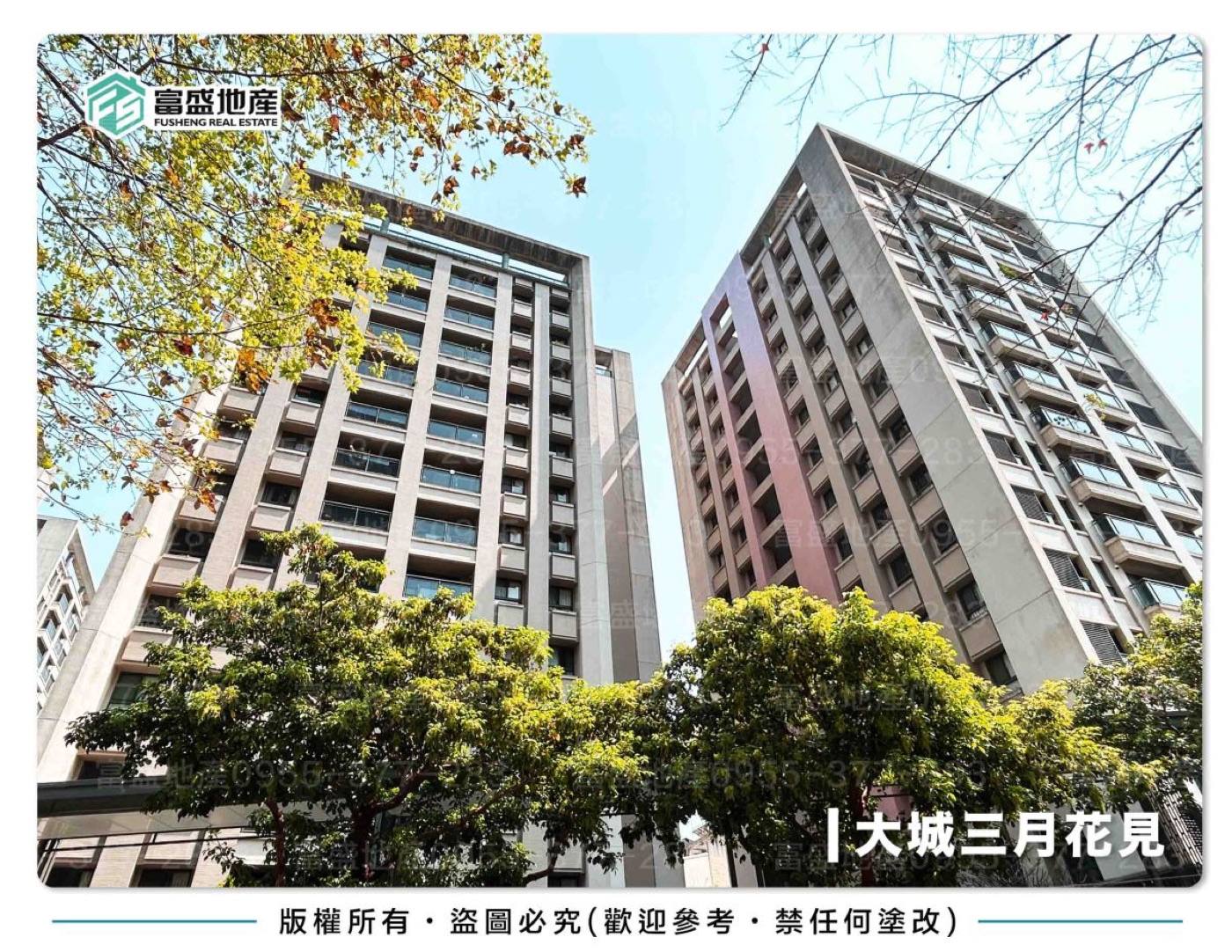
The title deed says 30 ping, but the flat you walk into is only 20 ping inside. Most first-time buyers in Taiwan ask the same thing: have I been cheated? Usually not. In Taichung’s newer redevelopment zones, a common-area ratio (公設比) a little over 30% is normal for a lift building. A ping (坪) is 3.3 m², and the common-area ratio is the share of your registered floor area that sits in shared space such as lobbies, stairs and lift halls rather than inside your own front door.
Three reference points before the detail:
| Building type | Typical common-area ratio | Note |
|---|---|---|
| Recently built lift towers | 30–35% | Common market range, not a legal figure |
| Lift mid-rise (電梯華廈) | 15–25% | Mostly 10 floors or fewer |
| Legal cap | None | Current law has no article capping the ratio |
Ranges are market observations; the legal points follow Ministry of the Interior announcements (data updated September 2026).
The short answer: four things stack up
A high ratio is rarely a scam. It is the combined result of fire-escape rules that enlarge stairwells and lift halls, tall buildings with few units per floor, developers adding more shared amenities, and a registration change that makes the number look higher than before.
Reason 1: fire-escape rules since July 2005
Buildings of 8 floors or more must have two direct-access staircases. This is the single biggest reason new towers sit above 30%. The rule comes from Article 95 of the Building Technical Regulations, Design and Construction chapter, in force since July of ROC year 94 (2005). Taller buildings must also add emergency lifts and smoke-exhaust lobbies. Towers built before that date mostly sit in the twenties; those built after mostly sit above 30%.
Reason 2: taller buildings, fewer units per floor
Lifts, stairs, lift halls and plant rooms are needed whether a floor has two homes or eight. The fewer units share them, the more each unit carries. Assume the lift hall, stairs and lift on one floor total 25 ping, and each home has 25 ping of interior space (counting only that floor):
| Units per floor | Share per unit | Ratio from this item alone |
|---|---|---|
| 8 units | 25 ÷ 8 = 3.13 ping | About 11.1% |
| 4 units | 25 ÷ 4 = 6.25 ping | 20% |
Same stairs, same lift, but the four-unit floor carries twice the share.
Reason 3: developer amenities, useful or just padding
How much lobby, gym, pool and function room to build is the developer’s decision. Two new towers with the same rules can differ widely, and this is usually where the gap comes from. The question is not how much shared space there is, but whether you will use what you are paying for.
| Type of shared space | Common examples | How to judge |
|---|---|---|
| Used daily | Entrance lobby, parcel room, refuse room | Small area, good value |
| Depends on the household | Gym, reading room, playroom | Worth it only if you use it |
| Usage tends to be low | Pool, banquet hall, karaoke room | Large area, high upkeep |
You pay for shared space once at purchase, then keep paying monthly management fees to maintain it.
Our view: In older communities it is not unusual for the pool or karaoke room to be shut down. When a facility closes, the ping you paid for are not refunded. This is a practical reminder, not a statistic.
Reason 4: a registration change makes the number look higher
For buildings whose permit was applied for on or after 1 January of ROC year 107 (2018), rain canopies (雨遮) and eaves are no longer registered. The denominator shrinks, so the ratio rises, even though the physical space is identical. The basis is Article 273 of the Cadastral Survey Implementation Rules, as explained by the Ministry of the Interior. For the same flat:
| Registration regime | Main plus ancillary area | Common area | Ratio |
|---|---|---|---|
| Old rules (canopy registered) | 21.5 ping, including 1.5 ping canopy | 10 ping | 31.75% |
| New rules (canopy not registered) | 20 ping | 10 ping | 33.33% |
Identical home, but the ratio moves from 31.75% to 33.33%. New projects carry a slightly higher number by design, so discount for this before comparing.
What ratio is reasonable?
Compare like with like: same building type, same era. For a new lift tower, 30–35% is normal; above 35% is when you should ask why. The table below is market experience, not law.
| Building type | Typical ratio |
|---|---|
| Townhouse (透天厝) | About 0–5% |
| Walk-up apartment, no lift | About 5–15% |
| Lift mid-rise (華廈) | About 15–25% |
| Lift tower, permit before July 2005 | About 20–30% |
| Lift tower, permit after July 2005 | About 30–35% |
| Amenity-heavy tower on a small site | 35% and above |
Ask three questions. Has the parking space been taken out? A figure that still includes parking cannot be compared. How far above similar communities of the same era is it? And of the extra share, how much will you actually use? A low ratio is not automatically better either: an old walk-up saves on common area but has no lift and no management.
How to calculate it: formula and worked example
Parking is not common area, so remove it from both the numerator and the denominator.
Common-area ratio = common-area ping ÷ (total deed ping − parking ping) × 100%
Common-area ping = total deed ping − parking ping − main building ping − ancillary building ping
Example: deed shows 42 ping in total, parking 9 ping, main building 19.5 ping, ancillary 2.4 ping.
Common area = 42 − 9 − 19.5 − 2.4 = 11.1 ping. Ratio = 11.1 ÷ (42 − 9) = 33.64%.
The building ownership certificate (建物所有權狀) or the building register transcript (謄本) lists the main building, ancillary building and common-part areas separately. If your figures are in square metres, multiply by 0.3025 to get ping. The interactive calculator is on our Chinese page (https://www.fshouse.com.tw/page/about/index.aspx?kind=817). Its reverse mode, which starts from a known ratio, estimates interior area including balconies and other ancillary space; the registered figures always govern.
Compare on price per usable ping, not deed ping
To judge which of two homes is dearer, use usable-area unit price = (total price − parking price) ÷ interior ping. Both homes below cost NT$12,000,000 with no parking space.
| Item | A: new lift tower | B: lift mid-rise |
|---|---|---|
| Deed area / ratio | 30 ping / 33% | 27 ping / 20% |
| Interior usable ping | 20.1 ping | 21.6 ping |
| Price per deed ping | NT$400,000 | NT$444,400 |
| Price per usable ping | NT$597,000 | NT$555,600 |
On deed price A looks cheaper. On usable price B is cheaper and gives 1.5 ping more inside.
Is the government going to regulate it?
As of September 2026 there is no article in current law that caps the common-area ratio, and Taiwan has not switched to a usable-area system. In September 2025 the Ministry of the Interior announced a “virtual ping reform” (虛坪改革) with three directions: ordinary lifts to be excluded from floor-area ratio calculations, upper and lower limits on management committee space, and parking to become private property so that buyers without a space no longer share the driveway. The start date will follow the Ministry’s announcement, and it will apply to projects applying for permits after that date. Existing homes on the market will not change their registered area.
Three documents to check the ratio yourself
You do not need to take anyone’s word for it. The building register transcript gives the common-part area; multiply by your share to get your common-area ping. The building survey plan (建物測量成果圖) shows how much of the ancillary area is canopy. The property disclosure statement (不動產說明書) lists each area and how the parking space is registered. See our guide to the offer documents for what else the statement contains.
FAQ
Why is the common-area ratio so high?
Four reasons. Since July 2005 buildings of 8 floors or more need two direct staircases; fewer units per floor means fewer people sharing; developers add leisure amenities; and since 2018 canopies on new permits are no longer registered, which shrinks the denominator.
What ratio is reasonable?
Compare within the same type and era. Market experience: walk-ups about 5–15%, lift mid-rises about 15–25%, lift towers permitted after July 2005 about 30–35%. Above 35% is on the high side.
How is it calculated?
Ratio = common-area ping ÷ (total deed ping − parking ping) × 100%. Remove parking first.
Is there a legal cap?
No. As of September 2026 no article in current law caps the ratio, and the Ministry’s reform does not set one either.
Conclusion
The share created by fire rules and building height cannot be avoided. What you should scrutinise is the share the developer added. If you do not have the transcript to hand, contact us with the community name and address and we will run the numbers. For the rest of the inspection, see the viewing checklist and the guide to resale, presale and new-build homes.